How people with cancer can feel better by marching through March
By Caroline Garrit
It has been proven, irrefutably, that if people are able to be active after a cancer diagnosis then we are more likely to have better outcomes. We can reduce the myriad side effects – long and short term – from the various modes of treatment and, crucially, we can help to reduce our risk of the cancer returning. For those living with cancer, exercise can help slow its progression.
There are no guarantees, of course, but exercising is one thing that we can do for ourselves, that we can take control of, and that has been shown to help us to feel better in many ways.
Increasingly cancer patients are aware of the benefits of being active but are often unsure how to start. After my surgery, I started, as have many others, simply by walking. I went out for a daily ‘constitutional’, a gentle couple of miles at first and then gradually built up. It helped me cope emotionally and mentally, especially as I’d look out for birds, flowers and other signs that nature was carrying on as normal despite my little world imploding at the time.
Something as simple as a daily walk ticks several boxes. It’s a basic, functional activity, it’s accessible and free. Walking can help our heart and lungs to recover their fitness and capacity after a period of illness or inactivity. Walking is a weight bearing activity, so it can help us to protect our bone density – which is often reduced by cancer treatments.
Walking uses the muscles in our buttocks and legs, which can be weakened by a period of inactivity. As a result of their cancer treatment, many people lose muscle mass from their limbs, and at the same time they gain fat around the torso. Walking can help offset both. A nice walk, in company or alone if you prefer, can sort your head out.
March is a lovely time of year to be thinking about walking more, when buds and blossoms start to appear, and will be followed soon by chicks and lambs. The longer days give us more scope to be outdoors, as does the finer weather.
Once we’re up and walking, there are things we can do to develop our walking to become even more impactful on our wellbeing,
Fine company
Walking with others can help spur us on. I’ve led Nordic walks through Maggies Cancer Support Centres for a decade now and one of the things I’ve noticed time and again is that people come as much for the company as they do the exercise. Walking with likeminded folks, in our case other people with cancer, means there’s a level of understanding and support that’s difficult to find elsewhere. Peer support, and the ‘social contract’ of a scheduled walk help us to making walking habitual rather than an occasional thing.
Consistency
One of the most important aspects of cancer rehab is consistency. That we start gently in whatever form of activity we’re going to do, and we then build up, slowly but surely. You can’t buy consistency, it has to come from within, but it pays for itself in heaps.
I wrote a post about walking a year ago in celebration of Walking All Over Cancer – more about that below – and wrote about my client Sarah, who, with stage 4 ovarian cancer, was walking 100kms during March 2023 for charity. Since then Sarah has become an all-weather ‘parkwalker’ and passed the parkrun milestone of having completed 50 parkruns. She is well, and just completed the London Winter Run 10k race.
Build stamina
During cancer treatment – especially chemo and immunotherapy – many people find that their stamina is lessened and that they just can’t keep going for as long as they could before. We can use walking as a manageable way to re-build stamina by simply adding distance, gently, over time. I often find that a training plan, such as couch to 5k, adds structure here. (There’s a version of this in my book)
Last year I also wrote about Juliet, who was Nordic walking on Hampstead Heath after breast cancer treatment. Juliet achieved something brilliant last autumn when she built her stamina and strength, through increasing the distance of her walks and by taking up weight training, and completed the Future Dreams Challenge, a half marathon over the South Downs. She was rewarded handsomely at the finish line, with ice cream.
Build strength
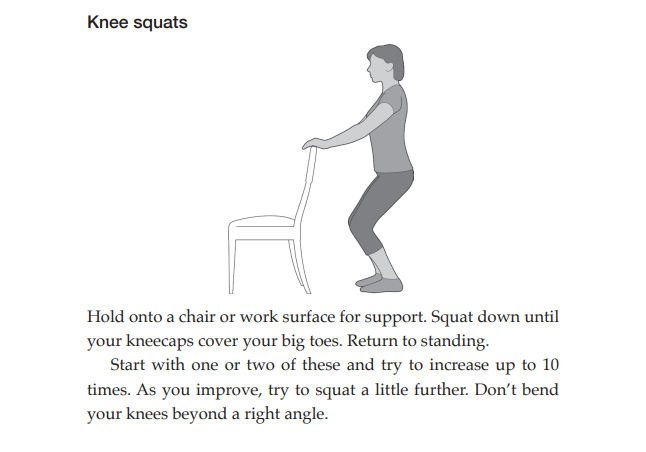
Juliet, Sarah and I (and countless others) have felt the dual impact of walking and strength training. As with cardio exercise, people are often unsure how they could safely start strength training after a cancer diagnosis. Here is a short strength routine that you could do, mid walk. It doesn’t need any equipment except a park bench, a fallen tree truck or a low wall.
Park bench routine
On my walk today I stopped and did a few minutes of strength exercises, using just my body weight and a park bench.
I did: Heel raises – Seated star jumps – Press ups – Sit to stand – Mountain Climbers – Squat with knee drive
Join me here: https://youtu.be/Fcu7XTa6WYo
Walk all over cancer
‘Walk all over cancer’ is an annual month-long fundraising initiative by Cancer Research UK in which the charity challenges participants to walk 10,000 steps every day through March and to raise sponsorship and awareness of issues relating to cancer as they go.
10,000 steps a day is a public health benchmark used globally and is believed to be optimal for avoiding early death from certain conditions. It actually originated in the 1960s in a marketing campaign for a pedometer in Japan, but it has held true ever since.
By taking part in Walk All Over Cancer, people are helping to fund future cancer research raise funds that could ultimately benefit people with a cancer diagnosis to live and thrive.
The impact is broader than that though. By promoting walking as a form of exercise, cancer charities and organisations like parkrun are helping people to walk more and to gain the often unrealised benefits of this very simple, natural form of movement.
So, we march our way through March.
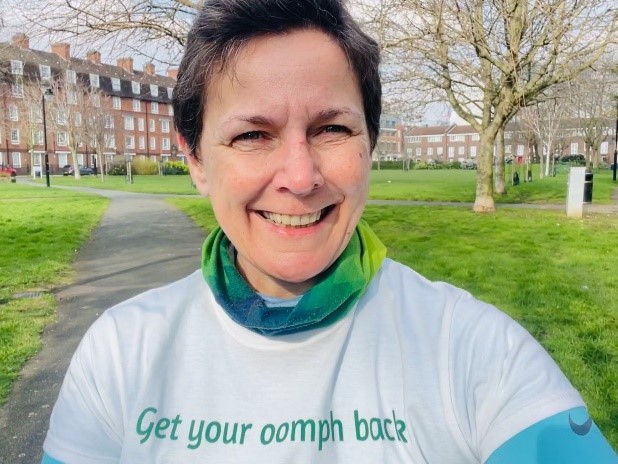
There’s more detail about the evidence around exercise and cancer, a description of the park bench strength exercises, and a couch to 5k training programme in my book ‘Get your oomph back, a guide to exercise after a cancer diagnosis’.
For more information
- 10,000 steps a day – a literature review. https://pubmed.ncbi.nlm.nih.gov/17716553
- Future Dreams South Downs Challenge https://futuredreams.org.uk/fundraising-challenges/#:~:text=south%20downs%20challenge,before%20finishing%20at%20Beachy%20Head
- Nordic walking at Maggies https://www.maggies.org/cancer-support/managing-practically/exercise-and-cancer
- Parkwalk with parkrun https://blog.parkrun.com/uk/2022/09/14/introducing-parkwalk-at-parkrun
- Walk all over cancer https://www.cancerresearchuk.org/get-involved/find-an-event/walk-all-over-cancer
- Walking blog from 2023 https://www.hammersmithbooks.co.uk/category/blog/wellbeing-and-illness-prevention

 Looking forward to 2024